Everybody Else's Highlight Reel Is Not Your Roadmap
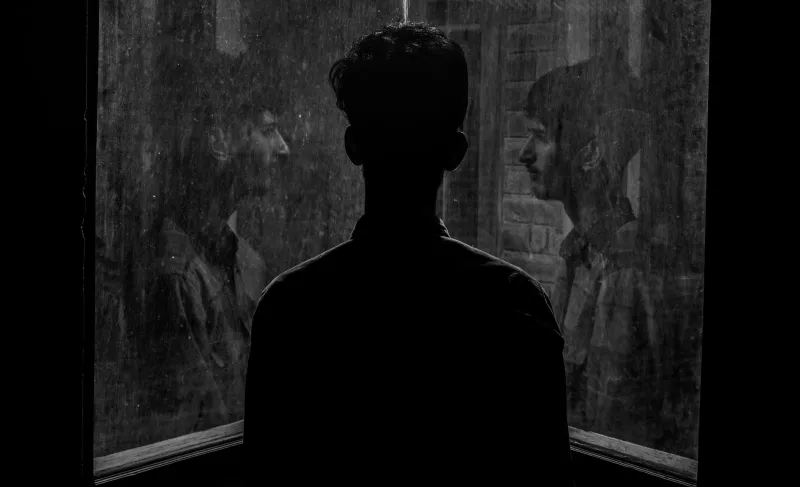
The Scoreboard Nobody Asked You to Keep
At some point, you started keeping score. Maybe it was subtle — a quick scroll through LinkedIn, a glance at a peer's IMDb page, a passing mention at an industry mixer that someone you came up with just signed a major deal. And just like that, a quiet little scoreboard lit up in the back of your head.
You weren't even trying to compete. But comparison doesn't wait for an invitation.
This is the thing about creative careers in entertainment: they don't follow a script. There's no standardized timeline, no universal benchmark for when you're supposed to have "made it," no official rubric for measuring whether your body of work is tracking correctly. And yet, a whole lot of talented people spend a whole lot of energy trying to measure exactly that — usually against the most misleading possible data points.
Other people's highlight reels.
Why Your Brain Defaults to Comparison
Here's the honest psychological reality: comparison is a deeply human instinct. Researchers have been studying social comparison theory since the 1950s, and the short version is that humans are wired to evaluate themselves relative to others. It's not a character flaw — it's a cognitive habit baked in from way before social media existed to turbocharge it.
The problem isn't that you compare. It's what you're comparing and how you're interpreting the data.
When you see a peer announce a new project, your brain processes that as information about where you stand. But here's what your brain conveniently ignores: you have no idea how long that person has been working on that project, what they gave up to get there, what deals fell through before this one landed, or whether they're privately terrified it's going to tank. You're comparing your full internal experience — the doubt, the setbacks, the grinding middle — to someone else's external announcement.
That's not a fair fight. It was never going to be.
The Specific Ways It Shows Up in Creative Work
Comparison doesn't always look like jealousy. Sometimes it's subtler and, honestly, more insidious.
It shows up when you abandon a project because it suddenly feels "behind" — like the cultural moment has passed and someone else already did the thing you were building toward. It shows up when you rush work out the door before it's ready because you feel like you're falling behind some invisible schedule. It shows up when you start making creative decisions based on what's working for other people rather than what's true to your own voice.
That last one is probably the most damaging. Because when you start reverse-engineering your creative instincts from someone else's success, you end up chasing a version of a lane that was never yours to begin with. You produce work that feels slightly off — not quite authentic, not quite original — because it's built on a foundation of "what they did" rather than "what I see."
And audiences feel that. Maybe not consciously, but they feel it.
The Timeline Myth
Entertainment culture loves a prodigy narrative. The 25-year-old who sold their first screenplay for seven figures. The director whose debut film premiered at Sundance and launched a career overnight. These stories get told and retold because they're dramatic and inspiring and they make for great copy.
What doesn't make great copy? The slow build. The decade of development. The body of work that accumulates quietly and then suddenly, one day, adds up to something undeniable.
But that second story is far more common. It's also far more replicable.
Some of the most respected voices in American entertainment — writers, directors, showrunners, composers — didn't break through until their late thirties or forties. Not because they were late bloomers in some deficient sense, but because the kind of work they wanted to make required time to develop. Required failure. Required the kind of perspective that only comes from living a little.
When you're obsessing over someone else's timeline, you're not just wasting energy. You're potentially rushing a process that needs exactly the amount of time it's taking.
Practical Ways to Break the Pattern
Recognizing the comparison trap is one thing. Actually climbing out of it is another. A few things that genuinely help:
Audit your inputs. Pay attention to what you're consuming and how it makes you feel about your own work. If certain accounts, newsletters, or conversations consistently leave you feeling behind or inadequate, that's data. You don't have to delete everything, but you can be intentional about limiting exposure during active creative periods.
Replace external benchmarks with internal ones. Instead of measuring against where someone else is, measure against where you were six months ago. Is the work getting more specific? More honest? More distinctly yours? That's the only progress that actually matters.
Finish things. One of the quietest antidotes to comparison anxiety is completion. When you're in the middle of something unfinished, you're vulnerable to the feeling that everyone else is further along. Finishing — even something small — reorients you toward your own momentum.
Talk to people who are behind you, not just ahead. Mentorship and perspective-sharing goes both ways. Spending time with people earlier in their careers is a genuine reminder that you've built something real — and that the timeline looks different from every vantage point.
What the Work Looks Like When You Stop
Here's the thing that's worth saying plainly: the most interesting creative work almost always comes from people who stopped caring about the external race.
Not because they stopped caring about quality or ambition — but because they redirected that energy inward. They got obsessed with their own creative problems instead of someone else's creative victories. They developed a point of view so specific and so personal that it couldn't be measured against anyone else's, because there was no equivalent benchmark.
That's not a romanticized idea. That's just how original work gets made.
When you're not constantly looking sideways, you start looking forward. And forward is the only direction that actually leads somewhere.
Your career has its own shape. Your creative evolution has its own pace. The sooner you stop trying to map it onto someone else's trajectory, the sooner you start building something that's genuinely, unmistakably yours.
And that's the work worth making.