That Sinking Feeling Isn't Failure — It's Proof You're Getting Better
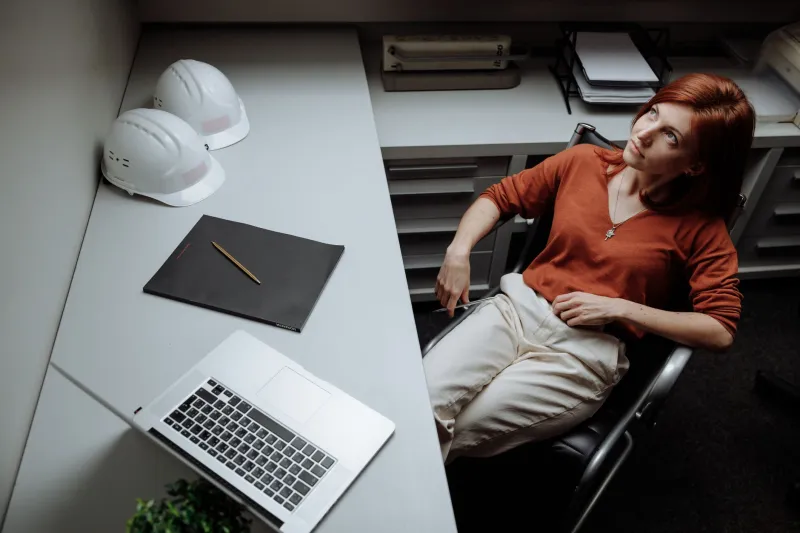
There's a specific kind of awful that comes with growing as a creative. It doesn't announce itself with fanfare. It shows up quietly, usually right after you've taken on something bigger than you've done before, and it whispers: You have no idea what you're doing.
Most people call that imposter syndrome. I've started calling it the confidence tax — because that's really what it is. The price you pay for expansion. And once you start seeing it that way, the whole experience shifts.
The Gap Nobody Talks About
Here's what actually happens when you grow creatively. Your taste gets sharper before your execution catches up. You start recognizing what good looks like at a higher level, but your hands — your instincts, your output — haven't quite gotten there yet. That gap between what you can see and what you can currently make is deeply uncomfortable. It's supposed to be.
Ira Glass talked about this years ago in an interview that still gets passed around creative circles, and for good reason — it nails something that most people feel but can't articulate. You got into creative work because you had good taste. That taste is what makes you dissatisfied with your early work. The solution isn't to feel better about where you are. It's to keep going until your skills catch up to your vision.
But here's the part that often gets left out: that gap doesn't disappear when you improve. It just moves. The more you grow, the more clearly you can see the next level you haven't reached yet. Which means the feeling of not-quite-there-yet is actually a permanent feature of serious creative development, not a phase you graduate out of.
Why Discomfort Gets Mistaken for Inadequacy
Creative professionals are particularly vulnerable to misreading their own internal signals. When you're working in a field where the quality of your thinking and your taste is the product, it's incredibly easy to conflate feeling uncertain with being unqualified.
But those are two completely different things.
Uncertainty is a signal about the situation. It means you're in territory that's new, that the stakes feel real, that you care about the outcome. Inadequacy would mean you lack the fundamental capacity to do the work. And nine times out of ten, when a creative person is spiraling about whether they belong in the room, they absolutely belong in the room — they're just responding to the newness of being there.
The brain doesn't naturally distinguish between "this is unfamiliar" and "this is dangerous." It treats both with the same alarm. So when you step up to a bigger project, a more visible opportunity, or a creative challenge that genuinely stretches you, your nervous system fires off warnings that feel an awful lot like you're not good enough for this. When really, what it's saying is pay attention — this matters.
Reframing the Anxiety as Data
Once you accept that the confidence tax is real and that you're going to keep paying it at every new level, you can start treating that anxious feeling as useful information rather than a verdict.
Ask yourself: What specifically feels uncertain right now? Not the vague, existential "I don't know what I'm doing" — dig into the actual thing. Is it the scope of the project? A skill you haven't fully developed yet? The fear of how it'll be received? Getting specific takes the feeling out of the realm of identity ("I'm a fraud") and puts it into the realm of problem-solving ("I need to get sharper on this one thing").
That shift is everything. Anxiety as identity is paralyzing. Anxiety as data is actionable.
I've noticed in my own work that the projects I was most nervous about — the ones where I genuinely wasn't sure if I could pull it off — are almost always the ones I'm most proud of in retrospect. Not because the nervousness meant I was doing something important (though sometimes that's true), but because the nervousness meant I was actually pushing against my own edges. The comfortable projects, the ones that felt easy from the start, rarely moved anything forward. They were fine. They just weren't growth.
The Comparison Trap Makes It Worse
Social media has turned imposter syndrome into a full-contact sport. You're already dealing with the internal noise of self-doubt, and then you layer on a curated highlight reel of everyone else's wins, and suddenly your uncertainty feels like proof that you're uniquely behind.
You're not. The people you're comparing yourself to are paying the same confidence tax you are — you're just not seeing their receipts.
This isn't a "everyone struggles so don't worry about it" platitude. It's a structural reality of how creative development works. The people at the top of any field will tell you, if you catch them in an honest moment, that they still have days where they feel completely out of their depth. The difference isn't that they've escaped the feeling. It's that they've stopped treating the feeling as a stop sign.
What to Do When You're In It
When the confidence tax hits hard, a few things actually help:
Go back to evidence. Pull up old work. Not to feel superior to your past self, but to see, concretely, that you have developed. The distance between where you were and where you are now is real, even when it doesn't feel like it.
Name what's actually new. Identify the specific thing that's unfamiliar in this moment. Usually it's one or two elements, not a wholesale collapse of your competence.
Keep the work moving. This is the hardest one, but it's the most important. The only way through the gap between where your taste is and where your skills are is to keep making things. Stopping doesn't close the gap — it just lets the anxiety fill the space where the work should be.
Talk to someone who's a few steps ahead of you. Not to ask for validation, but to hear how they think about it. Most experienced creatives are remarkably candid about the ongoing uncertainty in their process. That candor is grounding in a way that general encouragement isn't.
The Tax Is the Proof
If you're feeling the weight of imposter syndrome right now, here's what I want you to take from this: the discomfort you're feeling is not evidence that you've ended up somewhere you don't belong. It's evidence that you've pushed yourself somewhere new.
You can't grow without the gap. You can't close the gap without the discomfort. And you can't do meaningful creative work without being willing to sit in that discomfort long enough to come out the other side.
The confidence tax is real. Pay it, keep working, and know that the bill showing up means you're actually moving.