Before You Can Collaborate, You Have to Know Who You Are
The Room Got Quiet, and That's When Things Got Interesting
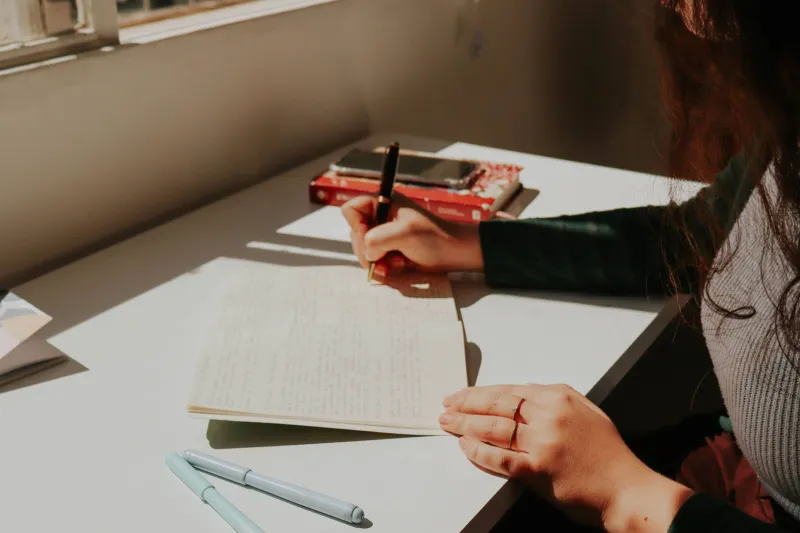
There was a stretch of about eighteen months where I worked almost entirely alone. No writing partners, no creative calls, no brainstorming sessions over coffee. Just me, a notebook, and a hard drive full of half-finished ideas I didn't know what to do with yet.
At the time, it felt like falling behind. Everyone around me was co-writing, co-producing, co-creating. Social media made it look like the only way to make something worthwhile was to make it with someone — loudly, publicly, in real time. I felt like I was doing it wrong.
Looking back, those eighteen months were the best creative education I ever gave myself.
The Pressure to Collaborate Before You're Ready
Here's something the entertainment industry doesn't say out loud very often: a lot of early-career collaboration is just two people with underdeveloped voices bumping into each other and hoping something good falls out.
That's not cynicism. That's just honest. When you haven't spent enough time alone with your own instincts, you don't actually know what you think. You know what sounds right in the room. You know what gets a nod from the person across the table. But that's not the same thing as having a genuine creative point of view.
The modern pressure to network constantly, to always be co-creating, to treat every conversation as a potential partnership — it's well-intentioned, but it can short-circuit the part of the process where you figure out who you are as a storyteller.
And if you don't know who you are, collaboration doesn't sharpen you. It dilutes you.
What Working Alone Actually Teaches You
When there's nobody else in the room, you can't outsource a decision. You can't float an idea and wait to see how someone else reacts before deciding whether you believe in it. Every choice — every structural decision, every tonal shift, every line you cut or keep — is yours to make and yours to live with.
That's uncomfortable. It's also incredibly clarifying.
During that solo stretch, I started noticing patterns in my own work I'd never seen before. Themes I kept returning to without realizing it. A particular rhythm in the way I built scenes. A tendency to pull back emotionally right when a story needed me to push forward. I couldn't have seen any of that in a collaborative environment, because collaboration creates noise — good noise, often, but noise.
Solitude creates signal.
You learn your defaults. You learn where your instincts are strong and where they're lazy. You learn what you actually find interesting versus what you think should be interesting. That self-knowledge is not a soft, nice-to-have thing. It is the core infrastructure of a creative career.
The Paradox Hiding in Plain Sight
Here's the thing nobody tells you: the people who are the best collaborators are almost always people who've done serious time working alone first.
Think about the writers, directors, and musicians you admire most — the ones whose collaborations feel electric rather than muddy. There's usually a period of solitary development in their story. They came into the partnership knowing exactly what they were bringing. They had opinions. They had instincts they'd tested and refined. They knew when to hold a position and when to genuinely let something go.
That's what makes collaboration work. Not just willingness, but specificity. Two specific creative voices in conversation create something neither could alone. Two vague ones just create confusion with a shared byline.
Alone Doesn't Mean Isolated
I want to be clear about something, because this is where the argument can tip into something unhealthy. Working alone and being isolated are not the same thing.
During my solo period, I was still consuming — voraciously. Films, books, music, long-form journalism, conversations with people I respected. I was still paying attention to the world. I just wasn't making things in partnership mode. I was making things in discovery mode.
That distinction matters. The goal of solitary creative work isn't to wall yourself off from influence or feedback forever. It's to develop enough of a foundation that when you do open the door to collaboration, you're meeting someone as a full creative person rather than a work in progress looking for someone else to complete you.
When You're Finally Ready to Partner Up
When I eventually started collaborating again — really collaborating, not just sitting in the same room with someone — something had shifted. I could hold my own in a creative conversation without losing myself in it. I could recognize when a collaborator's idea was genuinely better than mine and embrace it enthusiastically, rather than feeling threatened. I could also push back with confidence when I knew something wasn't right, because I understood why I believed what I believed.
Good collaboration is not the absence of ego. It's ego that's been examined, understood, and brought under some degree of control. You can't do that work in public. You have to do it alone.
Give Yourself the Time You Actually Need
If you're early in your creative career and you're feeling pressure to be constantly partnering, networking, and co-creating — take a breath. The partnerships will be there. The network will build. But your voice, your instincts, your specific and irreplaceable way of seeing the world? Those need tending first, and that work is quiet.
Some of the best storytelling decisions I've ever made happened when nobody else was watching. That's not a flaw in the process. That's the process.
Figure out who you are. Then go find the people who make that version of you better.